Creel Center for Chinese Palegraphy

About the Creel Center

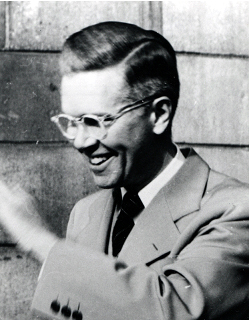
The Creel Center for Chinese Paleography was established in 2006 to foster the study of textual materials unearthed in China. Supported from a bequest by Herrlee G. Creel (1905-1994), a pioneer in the study of early China at the University of Chicago, the Creel Center sponsors symposia and student workshops, visiting professors and lecturers, and cooperates with colleagues in China and elsewhere to develop electronic resources for the study of paleographic texts.


Director’s Welcome

Welcome to the website of the recently established Creel Center for Chinese Paleography. Founded one hundred years after the birth of Professor Herrlee G. Creel, who already in his classic study The Birth of China (London: Jonathan Cape, 1936) pioneered the use of paleographic materials to study the cultural history of ancient China, the Creel Center is still in its own infancy. We hope in the years to come to be able to serve as the Western world’s portal for the study of the textual sources that have been unearthed in China over the last century, including especially the incredible discoveries of the last decades. Most of our programs will necessarily be based at the University of Chicago, but we will also strive to make them available to scholars and students throughout the world.
This year our most important initiative is our sponsorship of Professor Chen Jian 陈剑 of Fudan University in Shanghai as a visiting professor in the Department of East Asian Languages and Civilizations. Professor Chen is the foremost young paleographer working in China today, and has published extensively on oracle-bone and bronze inscriptions and particularly on Warring States manuscripts from the state of Chu. While at Chicago he is teaching a year-long seminar on paleography ranging across these various sub-fields. At the request of colleagues at the University of Michigan and Oxford University, we are making Professor Chen’s classes available as web-casts, and would be happy to extend this courtesy to colleagues at other universities upon request.

Over the next several years we are embarked on a Project on Early Chinese Excavated Texts that is supported by a special grant from the Luce Initiative on East Asian Archaeology and Early History of the Henry Luce Foundation. We have an ambitious series of conferences, workshops and publications planned for this Project, beginning with joint sponsorship (together with the Centre for the Study of Bamboo and Silk Manuscripts of Wuhan University and the Department of Chinese Literature of Taiwan University) of the Third International Forum on Bamboo and Silk Manuscripts, which was held at International House of the University of Chicago, October 30 through November 2, 2008. This Forum brought together thirty scholars from China, Taiwan, the United States, Korea and France to discuss recent work on Warring States manuscripts. This year the Forum had a special focus on the general topic of literacy and the communication of knowledge in ancient China.

In July, 2009, we joined together with the Centre for the Study of Bamboo and Silk Manuscripts of Wuhan University to sponsor a Graduate Student Workshop on Excavated Texts, held at Wuhan University. This workshop was intended to bring together graduate students from China, Taiwan and North America to study with the leading paleographers in China. Students from North America also had the opportunity to visit Shanghai and Changsha to examine first-hand some of the ancient manuscripts housed in those cities.

Also with the support of the Luce Initiative, the Creel Center proposes to spearhead two major publication projects over the next several years. The first will be both a state-of-the-field report on the study of early Chinese excavated texts and an introductory guide to the field designed to complement Tsuen-Hsuin Tsien’s classic work Written on Bamboo and Silk: The Beginnings of Chinese Books and Inscriptions, (University of Chicago Press, 1962; re-published in a second edition in 2004 with an afterword by Edward L. Shaughnessy). The second book, intended for a more general audience, will trace the rise of the book in China, introducing the Chinese textual tradition to Western readers, and considering the ways in which knowledge was produced and communicated in different periods of China’s early history.

We also hope to develop two independent databases that will be accessible through the Creel Center website. The first will be an index to Western-language translations of Chinese excavated texts, from oracle-bone inscriptions through Qin and Han documents. The second will be a digital library of Western-language studies of Chinese paleography. This latter will complement similar digital libraries of Chinese-language studies being developed at partner centers in China and Taiwan.

In all of these projects, we invite the collaboration of interested scholars everywhere. It is now clear that Chinese archaeologists have discovered only a very small amount of the written materials produced in ancient China, and there will be more and more discoveries to look forward to in the future.